
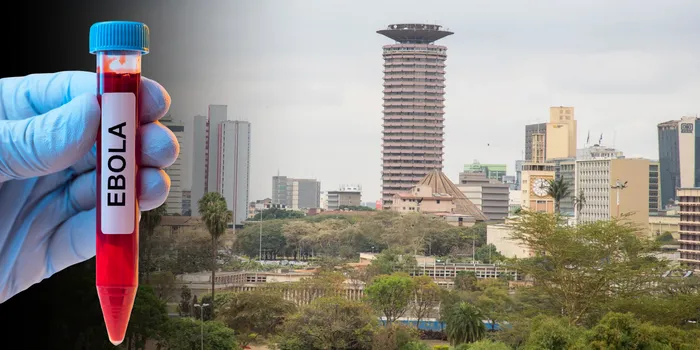
Kenya has confirmed a third case of Ebola after a 65-year-old woman tested positive for the disease, raising fresh concerns as health officials continue efforts to contain the outbreak.
The Ministry of Health announced the latest case on Friday, October 16, 2026, revealing that the woman is a close relative of the first patient who died after contracting the virus.
According to health officials, the woman had been in quarantine since October 6 after being identified as a contact of the initial patient.
She later developed symptoms, including fever and a sore throat, prompting health workers to isolate her and collect samples for testing. The results confirmed that she had contracted Ebola.
The patient has since been transferred to an infectious disease treatment unit, where she is receiving supportive medical care.
Health officials said the early detection of the infection could improve her chances of recovery while helping prevent further transmission.
Kenya Tracks Contacts as Ebola Cases Rise
The latest confirmation brings Kenya’s total number of reported Ebola cases to three, including the first patient who died on October 5.
The second patient, a 39-year-old man who is also a close relative of the initial victim, remains in stable condition and is responding to supportive treatment.
The cases have been linked to an outbreak of the Bundibugyo strain of Ebola in the Democratic Republic of Congo.
Authorities have identified 130 people who may have come into contact with the first patient. By October 16, 127 had been traced and placed under quarantine, with efforts continuing to locate the remaining three.
Health officials have maintained that there is no evidence of community transmission in Kenya, noting that the second and third patients were already under quarantine when they developed symptoms.
The government, with support from the World Health Organization, continues to strengthen contact tracing, surveillance and monitoring as authorities work to contain the outbreak.
Members of the public are encouraged to follow official Ministry of Health guidance and seek medical advice if they develop symptoms after a possible exposure.
The situation remains under close monitoring as Kenya works to prevent further infections.