Kenyan politics was once again thrust into controversy following a fiery statement by Mumias East MP Hon. Peter Salasya over the proposed sale and valuation of state-linked assets, particularly Safaricom and the Kenya Pipeline Company (KPC).
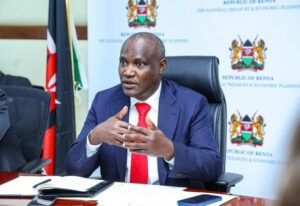
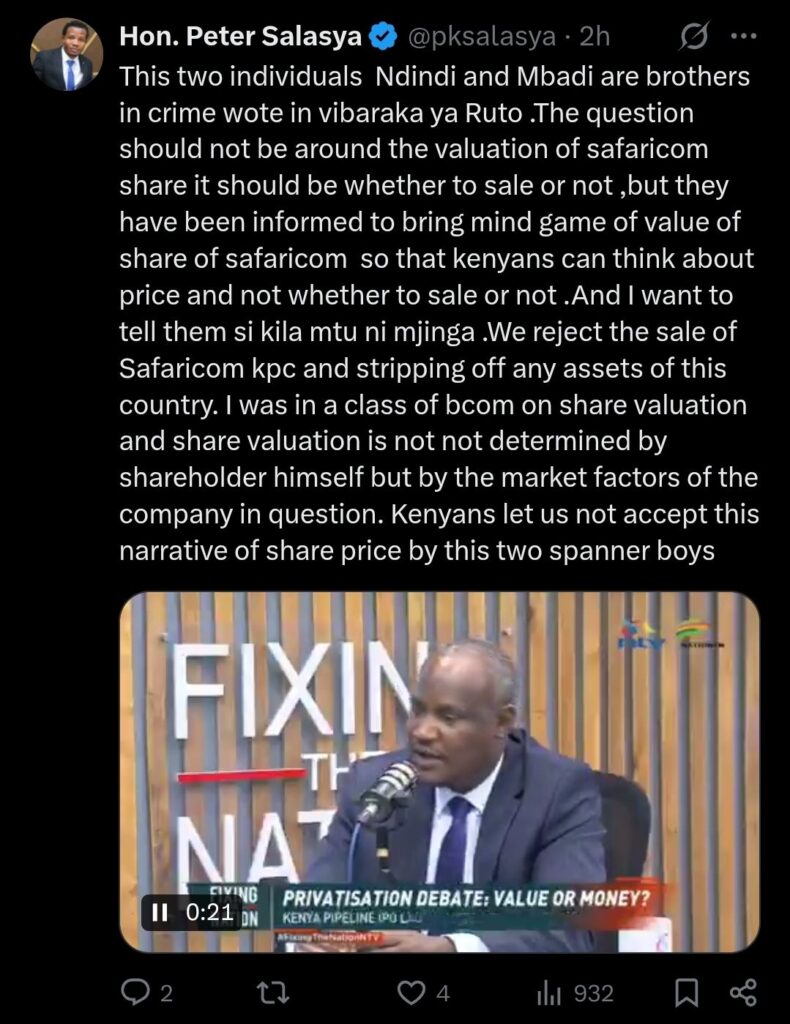
In a strongly worded post shared on his verified X account, Salasya accused two individuals, Ndindi Nyoro and Treasury CS John Mbadi, of allegedly pushing a misleading narrative around the valuation of Safaricom shares under President William Ruto’s administration.
According to Salasya, the public debate is being deliberately shifted to focus on the price or valuation of Safaricom shares rather than the fundamental question of whether such strategic national assets should be sold at all.
He claimed that Kenyans are being subjected to a “mind game” designed to distract them from opposing the sale by concentrating on numbers instead of principle.
The outspoken legislator rejected any attempt to privatize or dispose of Safaricom, KPC, or any other key public asset, warning that such moves amount to stripping the country of its wealth.
He emphasized that share valuation is determined by market forces, not by individuals or political actors, citing his academic background in business and commerce to support his argument.
Salasya urged Kenyans to remain vigilant and not accept what he described as manipulated narratives aimed at justifying asset sales.
His remarks come amid heightened public debate over privatization plans, with critics warning that selling profitable state-linked enterprises could undermine long-term economic sovereignty.
The comments have sparked mixed reactions online, with supporters applauding his bold stance while others question the tone and allegations.
Nonetheless, the post has reignited national discussion on transparency, accountability, and the future of Kenya’s most valuable public assets.

Author: Bashirjuma
About The Author