
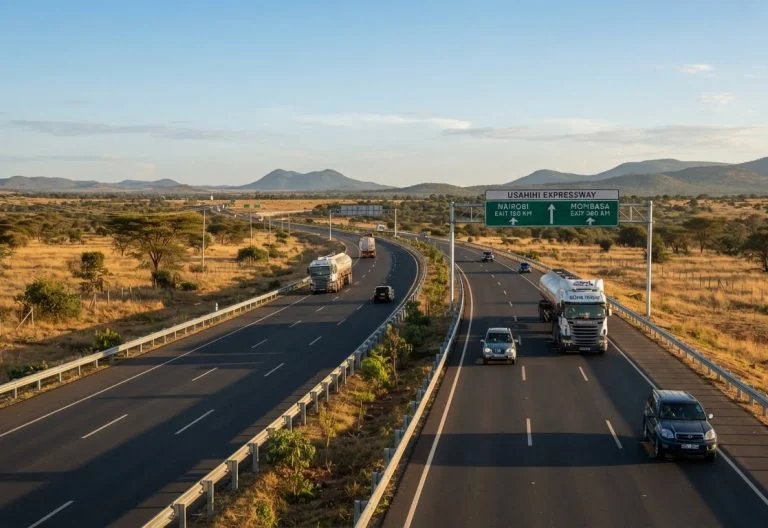
Motorists using the proposed expanded Nairobi-Mombasa highway could pay Ksh6 per kilometre, while heavy commercial vehicles may face charges of up to Ksh36 per kilometre under a new tolling model being considered by the National Infrastructure Fund (NIF).
NIF Chief Executive Officer James Mworia revealed the proposed rates while outlining how the Fund plans to finance the long-awaited highway expansion, which was previously being pursued under a Public-Private Partnership (PPP) arrangement.
Speaking during a television interview on Tuesday, November 24, 2026, Mworia said the proposed financing model could reduce the cost of delivering the project by approximately half compared with the earlier PPP proposal.
He explained that the Fund was targeting a toll charge of Ksh6 per kilometre for Class 1 vehicles and Ksh36 per kilometre for Class 6 vehicles.
According to Mworia, the proposed pricing structure is intended to support businesses and motorists by considering the savings that could come from using a more efficient highway.
Why the Government Says the Toll Charges Could Be Affordable
Mworia argued that motorists and transporters currently incur significant additional expenses while using the existing Nairobi-Mombasa highway because of road inefficiencies.
He cited costs associated with accidents, insurance, tyre wear and other vehicle operating expenses, estimating that transporting goods along the route could result in approximately Ksh15,000 in additional costs for a truck.
The NIF chief executive said the proposed toll charges would be assessed against the potential savings expected from a more efficient road, with the aim of ensuring that the toll does not become an additional burden on businesses and motorists.
He added that the Fund would also seek an engineering, procurement and construction (EPC) contractor capable of delivering the project within the targeted cost framework.
What Happened to the Ksh468 Billion Expressway Project?
The Nairobi-Mombasa highway expansion has previously been pursued through a proposal involving American investor Everstrong Capital, which, through its Kenyan subsidiary Usahihi Limited, had planned to construct a new expressway stretching approximately 459 kilometres from Mlolongo in Machakos County to Bonje in Mombasa County.
The project was estimated to cost Ksh468 billion and was expected to operate under a PPP arrangement, where the private investor would finance, construct, operate and maintain the road before eventually transferring it to the government.
However, on July 2, 2025, the National Treasury’s PPP Committee rejected the proposal, citing concerns about its financial structure, technical capacity and overall viability.
The committee subsequently directed the Kenya National Highways Authority (KeNHA) to consider restructuring the project around expanding the existing Nairobi-Mombasa highway rather than constructing an entirely new route.
The decision was partly informed by the high cost of acquiring land for a separate highway, which could have significantly increased the project’s overall cost and the toll charges motorists would be expected to pay.
Government Plans to Expand Existing Nairobi-Mombasa Highway
Under the redesigned proposal, the government intends to expand the existing approximately 461-kilometre highway from two lanes to at least four lanes and convert it into an access-controlled tolled road.
The project is expected to incorporate measures to preserve local connectivity while improving traffic flow along the major transport corridor.
According to the National Treasury’s PPP Directorate, the procurement process for a transaction adviser was initiated in March 2026, with bids closing on May 8. Evaluation of the submissions was underway according to the department’s June 2026 report.
The transaction adviser is expected to assess the project’s technical and financial feasibility and help determine its commercial structure and procurement strategy.
The Nairobi-Mombasa highway forms part of the Northern Corridor, which connects the Port of Mombasa to Nairobi and several landlocked countries in East and Central Africa, including Uganda, Rwanda, Burundi, South Sudan and the eastern Democratic Republic of Congo.
National Infrastructure Fund’s Role in Financing Major Projects
The proposed highway expansion forms part of the National Infrastructure Fund’s broader strategy to mobilise capital for major infrastructure projects while reducing reliance on conventional government borrowing.
The Fund was established in March 2026 and capitalised using proceeds from the partial divestiture of government interests in Kenya Pipeline Company and Safaricom.
Mworia, who was appointed the Fund’s founding CEO in September 2026, has outlined plans to use its capital to attract additional private investment into commercially viable infrastructure projects.
The Fund is also involved in financing arrangements for the planned expansion of Jomo Kenyatta International Airport while exploring ways to attract local institutional investors into infrastructure development.
For the Nairobi-Mombasa highway, the proposed toll rates represent a new approach to financing the expansion.
However, the Ksh6 and Ksh36 per-kilometre charges remain proposed figures, and the government has yet to confirm the final toll schedule, construction timeline, project cost and financing arrangements.