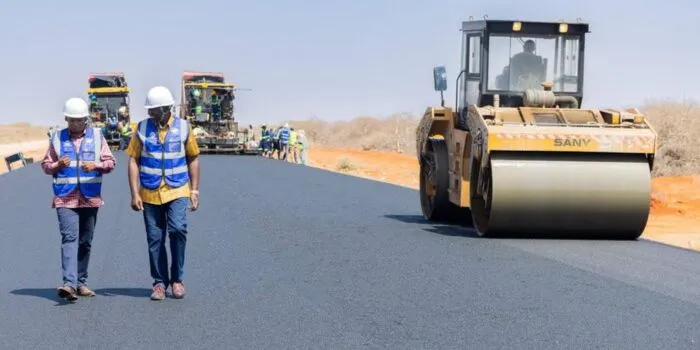
The World Bank has raised concerns over delays in compensating people affected by the construction of the KSh168 billion Isiolo-Mandera Highway, warning that the setbacks could significantly increase the project’s overall cost.
In a letter addressed to Treasury Cabinet Secretary John Mbadi, Roads and Transport Cabinet Secretary Davis Chirchir, and Lands Cabinet Secretary Alice Wahome, the bank’s Division Director for Kenya, Qimiao Fan, warned that delayed payments were preventing contractors from accessing some construction sites and disrupting the project’s implementation schedule.
According to the World Bank, every additional month of restricted access to construction sites could expose the project to approximately KSh1.2 billion in additional expenses.
The estimated costs include approximately KSh1 billion in recurring expenses such as security, supervision, idle equipment, personnel and rising construction-related costs. A further KSh207.5 million could be incurred through the removal and return of construction equipment.
The bank expressed concern that compensation funds had been available since 2024, but the payment process only began in November 2025 and has made limited progress.
Available figures show that 1,281 out of 1,669 eligible project-affected individuals had received compensation, with the government paying approximately KSh456 million along the Isiolo-Kulamawe section.
Other sections have also experienced setbacks. The Wajir-Tarbaj-Kotulo section faces potential additional costs of KSh421 million monthly, while the Kotulo-Kobo-Elwak section could incur approximately KSh243 million in extra monthly expenses.
The delays have partly been attributed to challenges involving land valuation and the identification of rightful beneficiaries, particularly in areas where land is communally owned.
Meanwhile, the 740-kilometre highway, being developed under the Horn of Africa Gateway Development Project, had reached approximately 60 per cent completion as of October 2026.
Initially expected to be completed in January 2028, the project’s completion timeline has since been pushed to around June 2030.
The World Bank has urged the Kenyan government to resolve the outstanding compensation issues to prevent further delays and avoid additional financial pressure on one of the country’s major infrastructure projects.