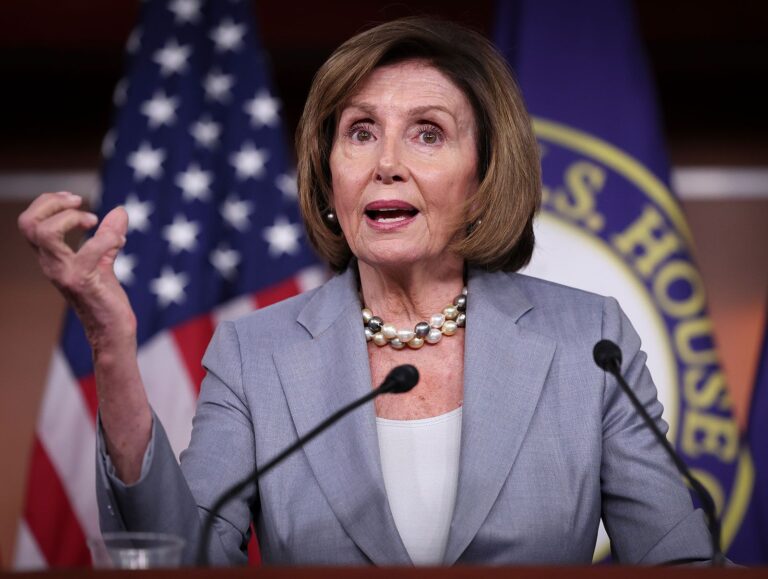
Former Congresswoman Marjorie Taylor Greene sparked controversy as she criticized a letter from Attorney General Pam Bondi and Deputy Attorney General Todd Blanche to Congress.
The letter, sent under the Epstein Files Transparency Act, details redactions in millions of released Jeffrey Epstein-related documents and lists “government officials and politically exposed persons” mentioned in them.
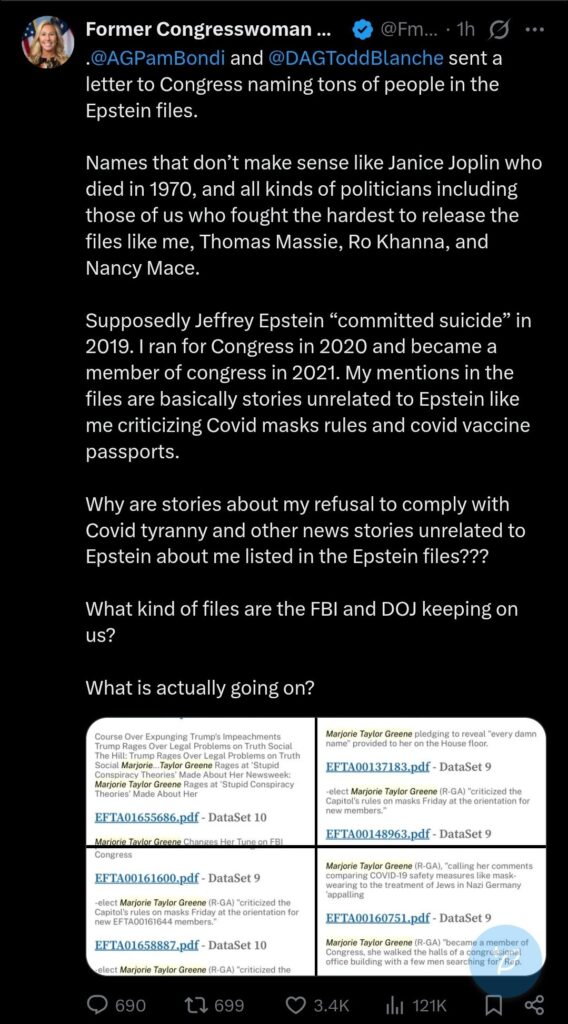
Greene highlighted seemingly inexplicable inclusions, such as singer Janis Joplin (who died in 1970) and politicians like herself, Rep. Thomas Massie, Rep. Ro Khanna, and Rep. Nancy Mace—figures who advocated for full disclosure.
She noted her mentions appear tied to unrelated news stories about her criticism of COVID-19 mask rules and vaccine passports, not Epstein connections.
“Why are stories about my refusal to comply with Covid tyranny… listed in the Epstein files???” she asked, questioning what broader surveillance files the FBI and DOJ might maintain.
The DOJ’s January 2026 release included over 3 million pages (with redactions for victim privacy, child exploitation material, and ongoing probes), following the 2025 law signed by President Trump.

The letter defends redactions as non-political and provides context: names arise in varied ways, from direct Epstein interactions to mere media mentions in investigative records.
Greene’s post reflects frustration among some transparency advocates, who see the broad list as diluting focus on Epstein’s crimes rather than revealing a “client list.”
Critics argue it includes irrelevant historical or public figures, potentially overwhelming meaningful scrutiny. The release has fueled ongoing debates about government accountability in high-profile cases.

Author: Bashirjuma
About The Author