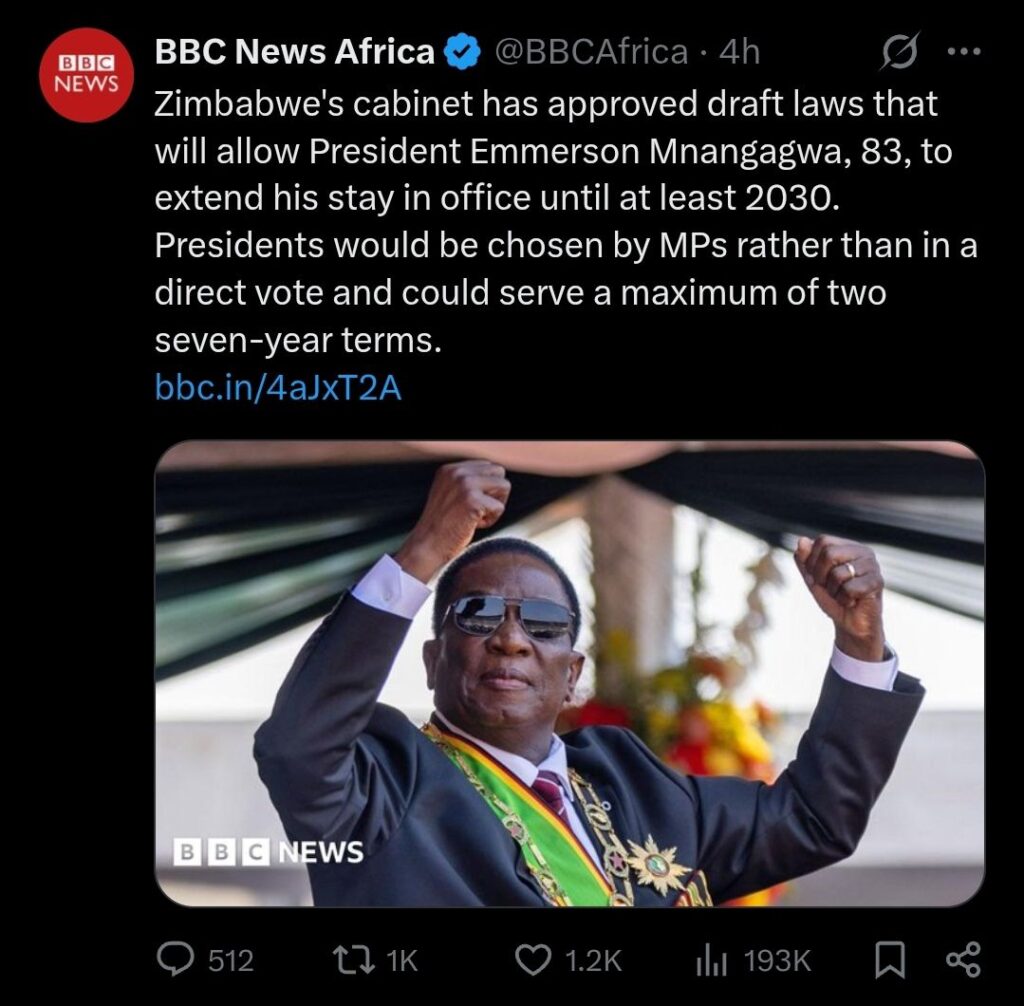
Zimbabwe’s cabinet has approved draft legislation that could allow President Emmerson Mnangagwa to extend his rule until at least 2030, sparking concerns over democratic backsliding in the southern African nation.
The proposed constitutional amendments would extend presidential and parliamentary terms from five to seven years and shift the election of the president from direct popular vote to selection by Members of Parliament.
Under the current system, Mnangagwa, now 83, is serving his second and final five-year term following his re-election in 2023.
These changes would enable Mnangagwa to potentially serve an additional two years or more, aligning with the government’s “Agenda 2030” development goals.
Justice Minister Ziyambi Ziyambi indicated that the draft bill aims to strengthen governance and bring political stability. The legislation will undergo public consultations before proceeding to parliament, where the ruling ZANU-PF party holds a dominant majority.
The move echoes Zimbabwe’s turbulent political history. Mnangagwa rose to power in a 2017 military coup that ousted long-time leader Robert Mugabe, who had ruled since independence in 1980. A 2013 referendum introduced presidential term limits amid fears of entrenched rule.
Critics, including constitutional experts, argue that such amendments may require a referendum and could face legal challenges, particularly as they appear tailored to benefit the incumbent.
Opposition voices have raised alarms about eroding democratic principles and shifting power away from voters.
As the bill advances, it highlights ongoing tensions in Zimbabwe’s governance and succession debates.

Author: Bashirjuma
About The Author