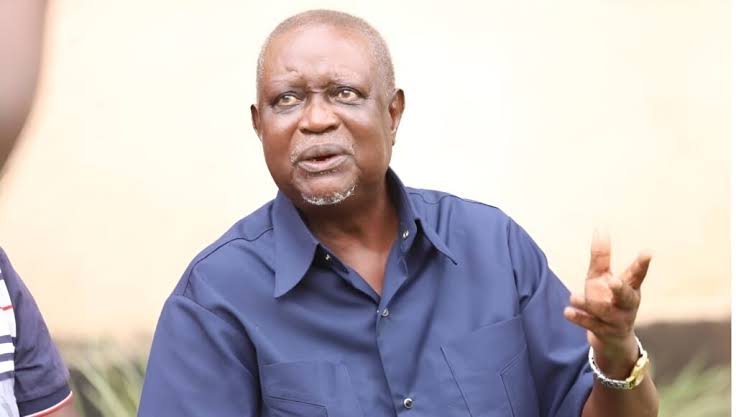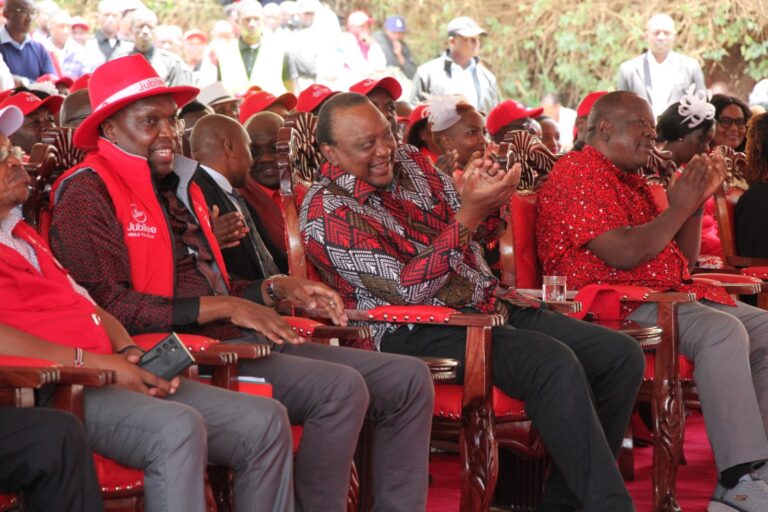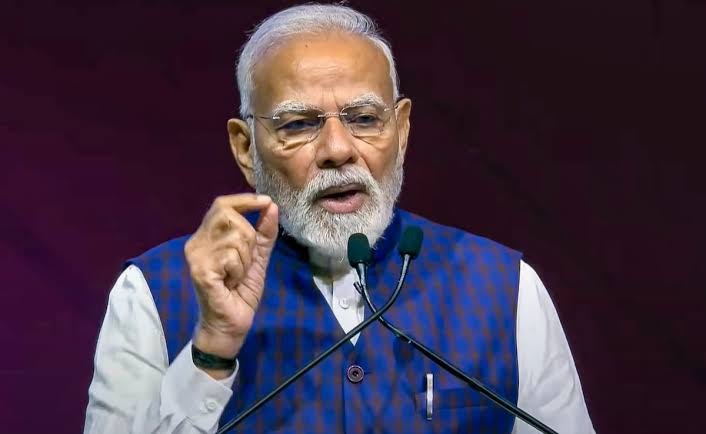
As the country heads to the 2027 general election, there have been many twists and turns from top politicians. Just recently, Uhuru Kenyatta made a move on the Azimio leadership, something that caused plenty of mixed reactions from different people. One of the latest one to react being Ahmednasir Abdullahi.
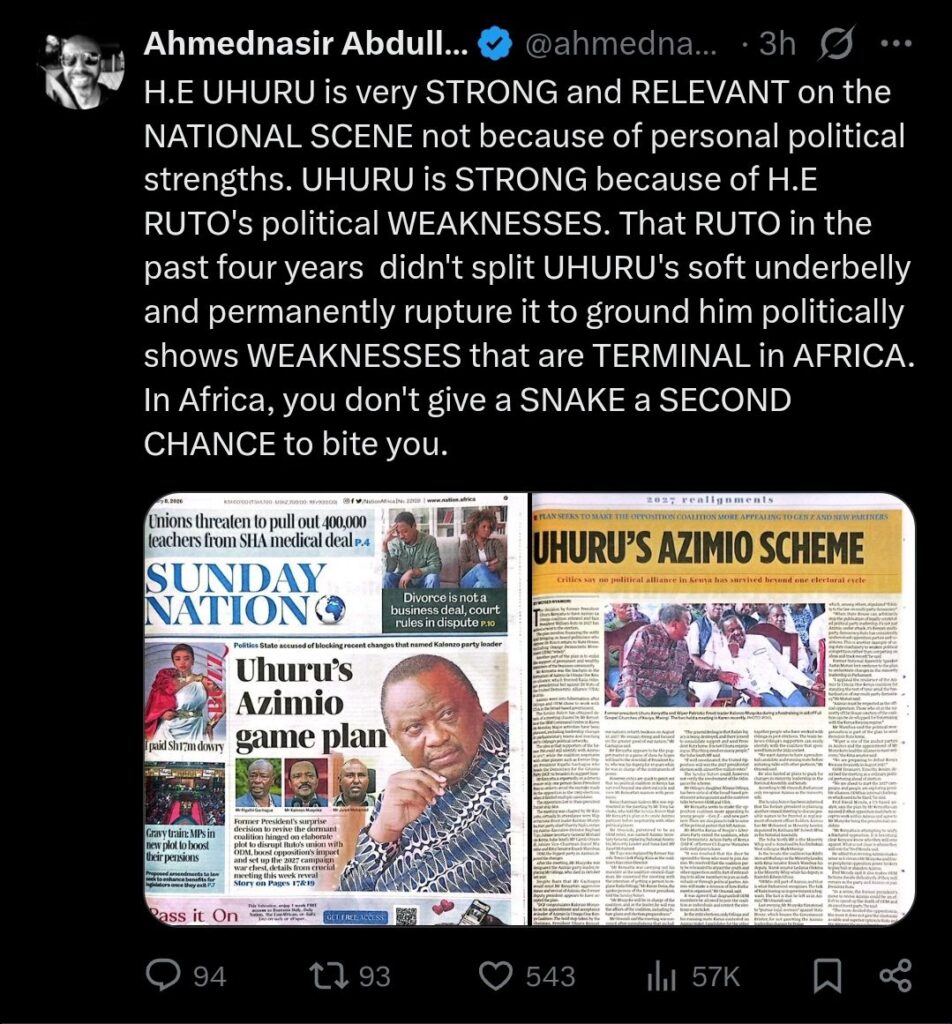
Through his official X account, Ahmedmednasir Abdullah maintained former President Uhuru Kenyatta remains a strong and relevant figure on the national stage not due to his own enduring political strengths, but because of President William Ruto’s terminal weaknesses.
The popular lawyer argues that Ruto’s failure over the past four years to decisively split Uhuru’s “soft underbelly”—likely referring to his Mt. Kenya support base, former allies, or the broader opposition coalition—and permanently sideline him politically reveals fatal flaws in Ruto’s strategy.
In African politics, the post warns, one does not grant a “snake” a second chance to strike, implying Ruto’s mercy or miscalculation has allowed Uhuru to regroup.
Recent developments lend context to this view. Uhuru has actively revived the Azimio la Umoja coalition, chairing meetings to reorganize leadership—including appointing Kalonzo Musyoka as party leader—and positioning it as a united opposition force ahead of 2027.

Newspaper clippings in the post, such as headlines on Uhuru’s “Azimio game plan” and coalition realignments, underscore his ongoing influence despite being out of office.
Critics see Uhuru’s resurgence as exploiting public discontent with Ruto’s administration, including economic pressures and unfulfilled promises. Yet, Ruto has dismissed such revival efforts, claiming dominance for re-election.
This dynamic illustrates Kenya’s fluid political landscape, where past rivalries and incumbent vulnerabilities keep retired leaders like Uhuru potent kingmakers—or threats—in the 2027 race.

Author: Bashirjuma
About The Author