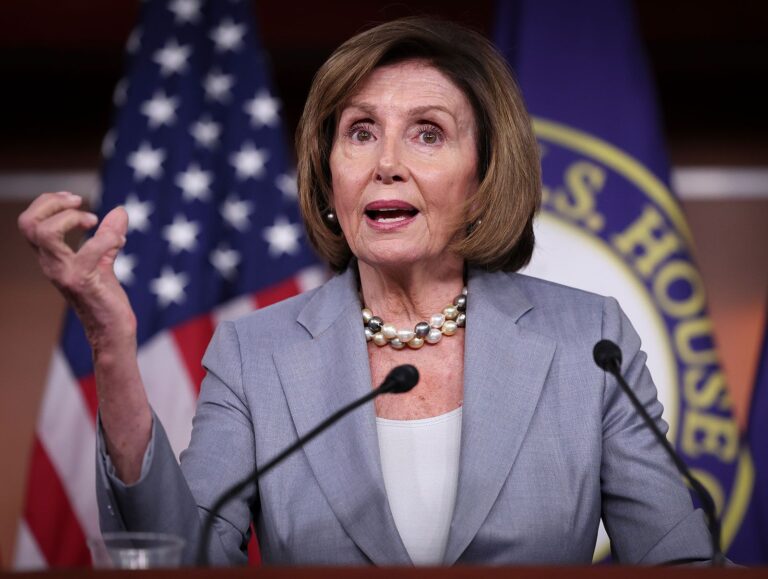
Marjorie Taylor Greene is one of the most known political leaders not only in US but also around the world. That is because of her outbursts and as things seem to be, she may not be backing down soon as today again, she dropped a controversial remark.
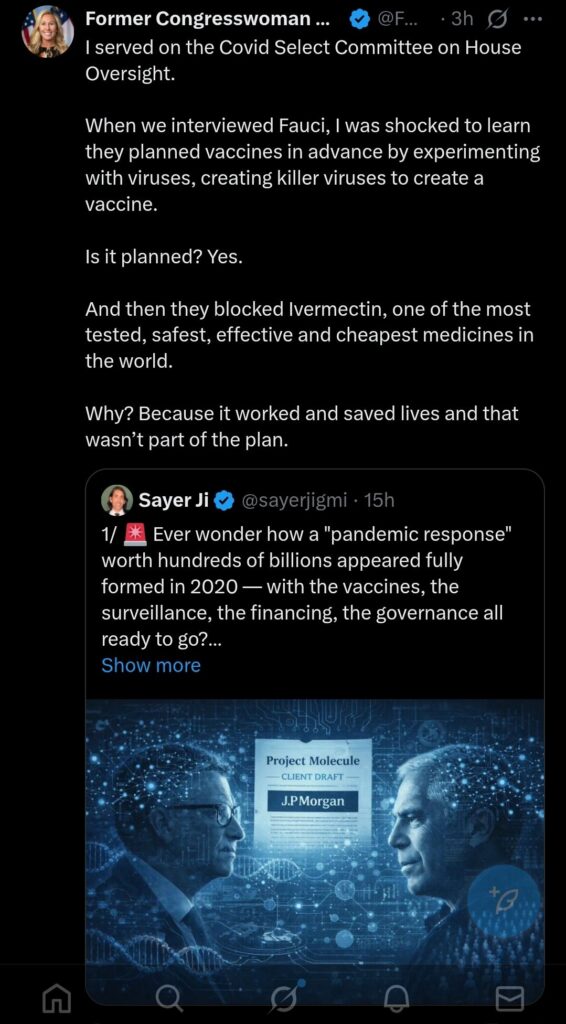
Through her official X account, Greene claimed that during interviews with Dr. Anthony Fauci, she learned vaccines were “planned in advance” through experiments creating “killer viruses” to develop countermeasures.
She asserts the pandemic was deliberate (“Is it planned? Yes”) and alleges authorities suppressed ivermectin—an inexpensive, widely tested drug—because it effectively treated COVID-19 and threatened vaccine profits or agendas.
The post quotes or references content from Sayer Ji, who highlights a purported “Project Molecule” document involving the Bill & Melinda Gates Foundation and J.P. Morgan.
This allegedly outlines pre-2020 infrastructure for pandemic surveillance, financing, governance, and vaccines—suggesting a coordinated, profit-driven framework ready for deployment.
These claims echo broader criticisms of gain-of-function research funded by the National Institutes of Health (NIH) under Fauci’s leadership at NIAID.
Congressional hearings, including Fauci’s 2024 testimony, scrutinized whether such research at facilities like the Wuhan Institute of Virology contributed to SARS-CoV-2.

However, Fauci consistently denied funding experiments that met strict regulatory definitions of gain-of-function capable of creating COVID-19, emphasizing semantic differences in terminology.
Official subcommittee reports and Fauci’s interviews found no evidence supporting deliberate engineering or planning of the pandemic.
Ivermectin’s efficacy against COVID-19 remains disputed; major health authorities like the FDA and WHO found insufficient evidence for broad use, citing risks and limited high-quality data favoring vaccines.
The post reflects ongoing skepticism toward official narratives, amplified by figures questioning public health institutions and pharmaceutical incentives.
While highlighting legitimate concerns about research oversight and transparency, such assertions often lack substantiated proof from mainstream investigations and risk oversimplifying complex scientific and policy debates.

Author: Bashirjuma
About The Author