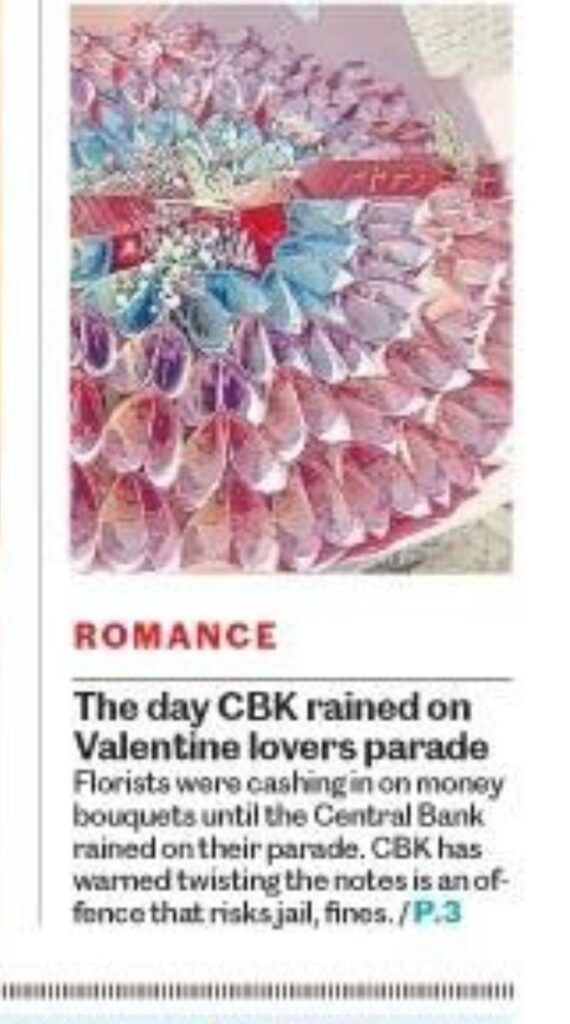
The Central Bank of Kenya (CBK) has dampened the romantic spirit ahead of Valentine’s Day by issuing a stern warning against the popular trend of creating “cash bouquets” or money flower arrangements.
In a notice released on February 2, 2026, the CBK highlighted a growing practice where florists and individuals fold, roll, twist, glue, staple, pin, or otherwise alter Kenya Shilling banknotes to form elaborate decorative bouquets.
These cash creations, often featuring colorful notes shaped into petals and tied with ribbons, have become a flashy alternative to traditional flowers, especially during celebrations like Valentine’s Day, weddings, and birthdays.
The post captures the moment perfectly: florists were “cashing in” on booming demand for these money bouquets until the CBK “rained on their parade.”
The bank emphasized that such handling defaces and damages the currency, rendering notes unfit for circulation.

Photo credit: Bonface Bogita | Nation Media Group
It also disrupts cash-processing equipment like ATMs, counting machines, and sorters, leading to higher rejection rates and increased costs for replacing worn-out notes—ultimately burdening taxpayers.
Citing Section 367 of the Penal Code, the CBK warned that willfully mutilating or impairing banknotes is a criminal offence, punishable by fines, imprisonment (with some reports noting up to seven years in severe cases), or both.
While cash gifts remain acceptable, the regulator urged Kenyans to use non-damaging methods, such as presenting money in envelopes or unmodified form.
The timing has sparked mixed reactions, with some lovers joking that the directive has “ruined” Valentine’s plans, while others welcome the move to protect the currency.
This Valentine’s season, romance may need to bloom without twisting the notes—literally.

Author: Bashirjuma
About The Author