Uganda’s top military commander, General Muhoozi Kainerugaba, son of President Yoweri Museveni and Chief of Defence Forces, sparked a brief but intense diplomatic row with the United States on January 30, 2026.
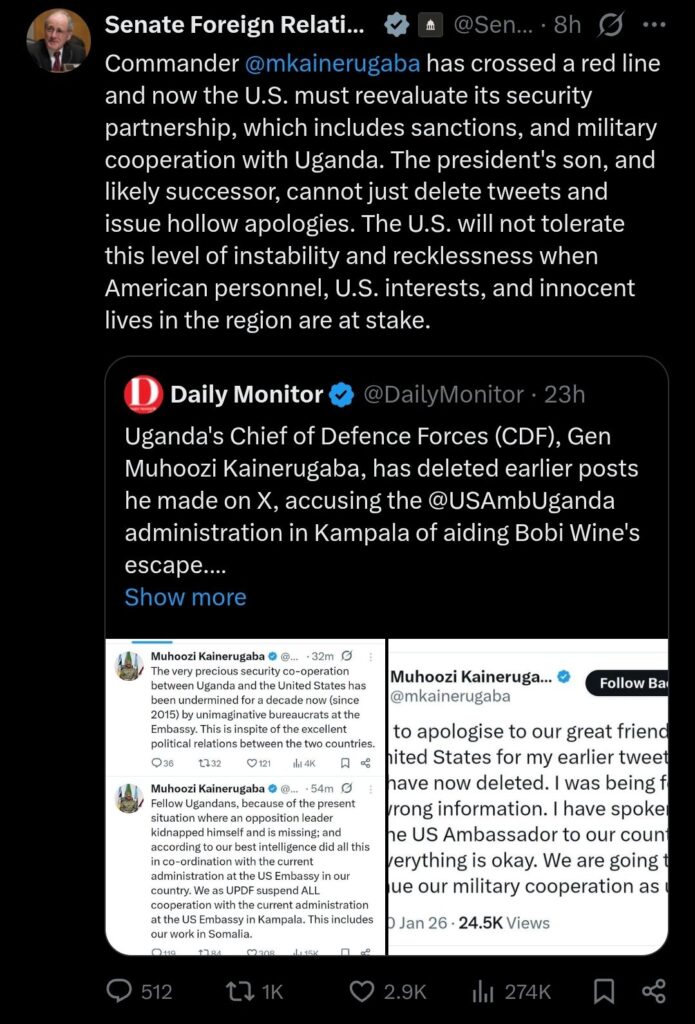
In a series of now-deleted posts on X, Kainerugaba accused the U.S. Embassy in Kampala of aiding opposition leader Bobi Wine’s escape and hiding following disputed elections and a military raid on his home.
He announced the suspension of all military cooperation with the embassy, including joint operations in Somalia, claiming “unimaginative bureaucrats” had undermined ties since 2015.
Hours later, Kainerugaba reversed course, deleted the posts, and issued an apology: “I want to apologise to our great friends, the United States, for my earlier tweets that I have now deleted. I was being fed wrong information. I have spoken with the US Ambassador… and everything is okay. We are going to continue our military cooperation as usual.”
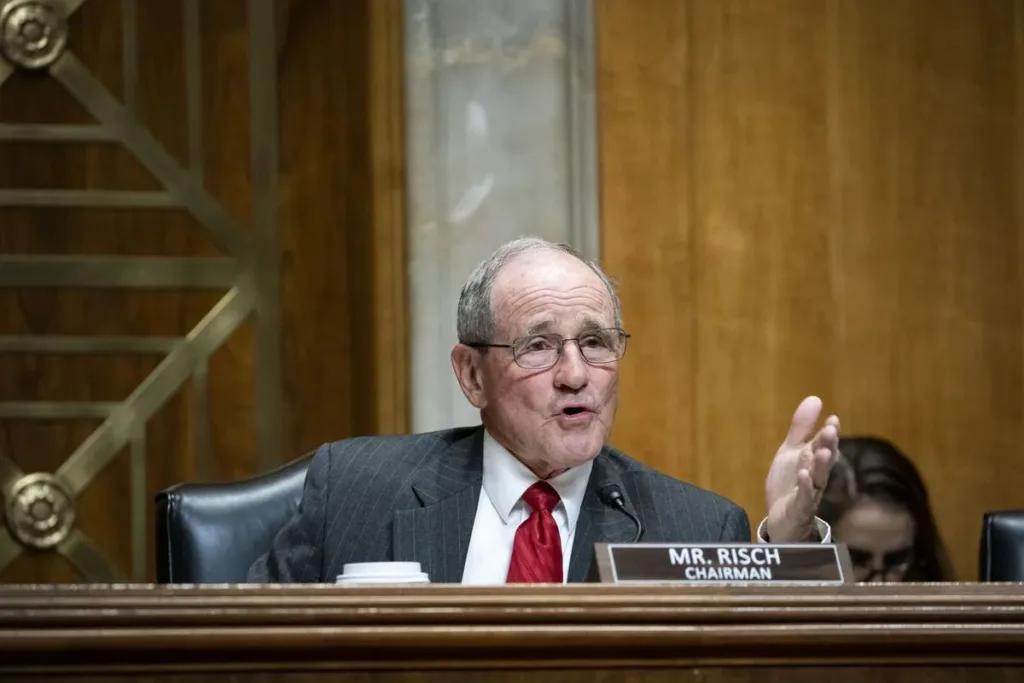
The U-turn failed to satisfy U.S. Senate Foreign Relations Committee Chairman Jim Risch, who declared that Kainerugaba had “crossed a red line.”
In a pointed statement, Risch dismissed the apology as “hollow” and called for the U.S. to reevaluate its security partnership with Uganda, potentially including sanctions and reduced military cooperation.
He emphasized that the U.S. would not tolerate such “instability and recklessness” when American personnel, interests, and regional lives are at stake—especially given Kainerugaba’s role as Museveni’s likely successor.
This incident highlights fragile U.S.-Uganda relations amid ongoing concerns over elections, opposition crackdowns, and human rights in the East African nation.

Author: Bashirjuma
About The Author