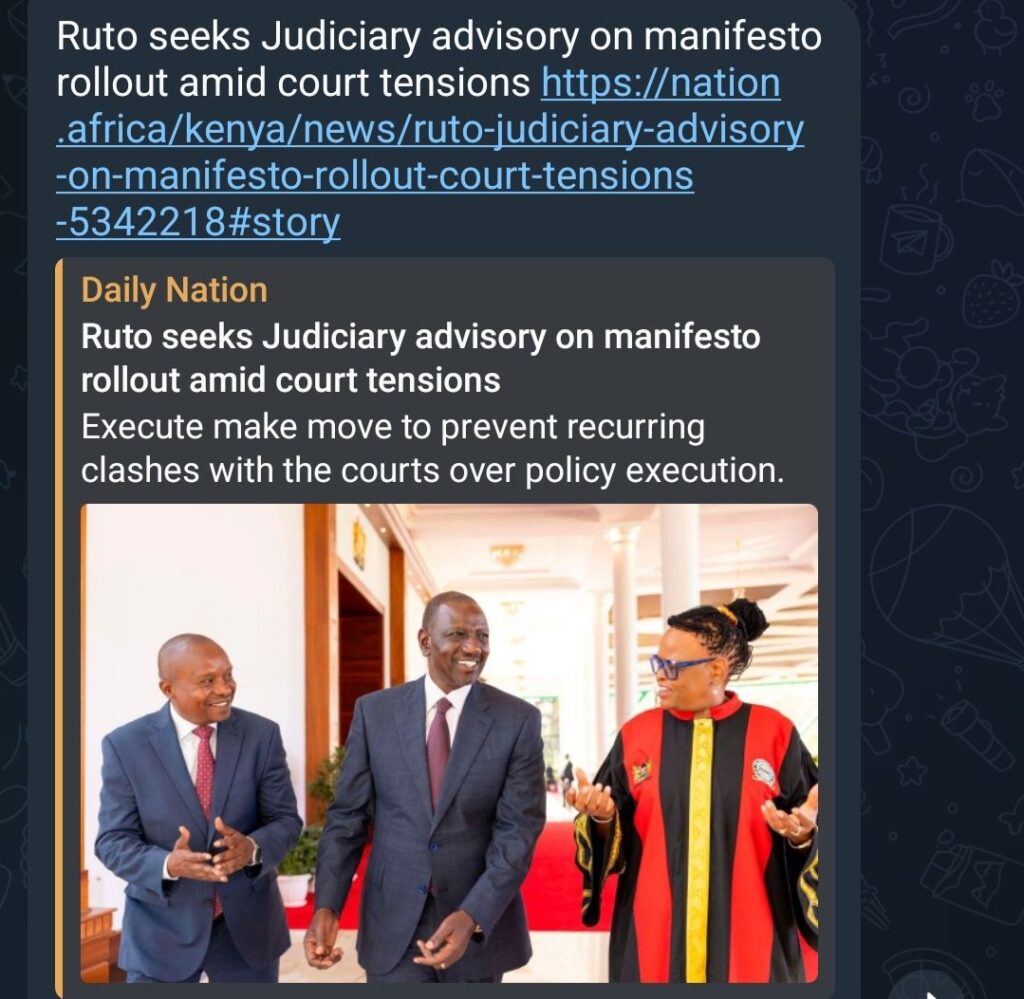
President William Ruto has announced plans to seek an advisory opinion from Kenya’s Judiciary on the legal status and role of political party manifestos in government policy implementation.
This move comes amid ongoing tensions between the Executive and the courts, where several administration initiatives have faced legal challenges, leading to delays and setbacks.
Speaking during the swearing-in of 15 new Court of Appeal judges at State House on January 28, 2026, President Ruto expressed the need for clarity on how far an electoral manifesto—the policy blueprint voters endorse—can guide governance without violating constitutional limits.
“I will be approaching the court to help me understand the place of a manifesto—the policy document upon which a government is established,” he stated, adding that this would shift political discourse from personalities to policies.

Ruto highlighted that manifestos reflect the will of millions of Kenyans, yet their implementation often faces court contests, particularly over issues like public participation.
He proposed seeking structured judicial guidance early to prevent recurring clashes, reduce policy reversals, and provide certainty for investors and the public.
The initiative signals a potential shift toward institutional dialogue and cooperation rather than confrontation between the branches of government.
It aims to safeguard the separation of powers while enabling smoother execution of the Kenya Kwanza agenda.

Author: Bashirjuma
About The Author