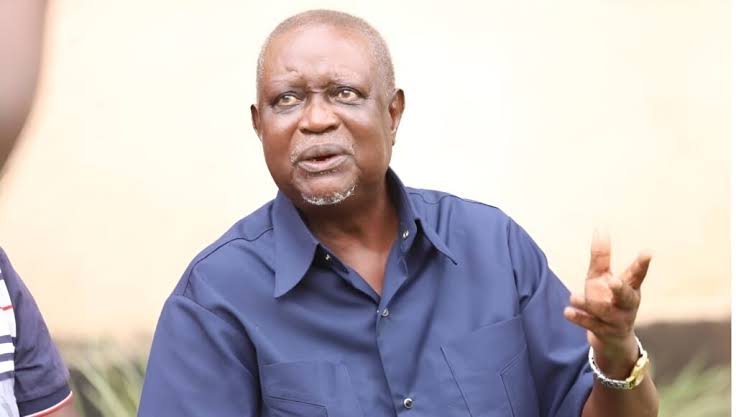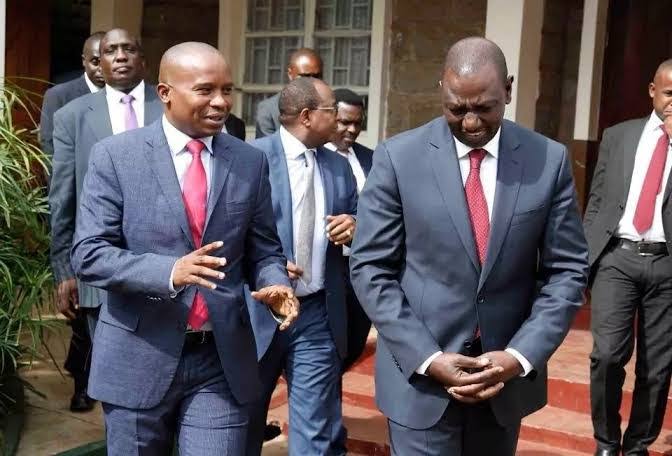
Hon. Justin Muturi’s remarks on Kenya’s bursary system have reignited a national debate on access to education and the dignity of learners and their families.
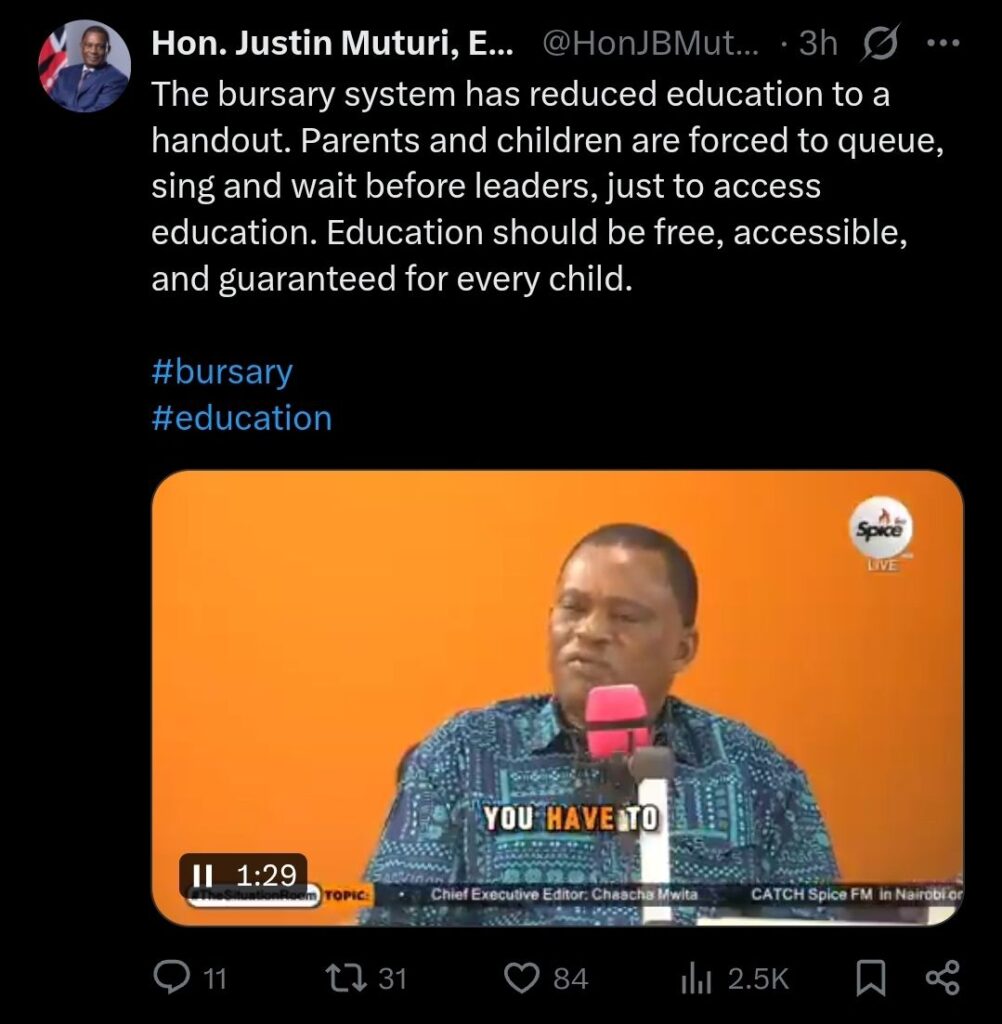
Through his official X account, Muturi sharply criticizes the current model, arguing that bursaries—meant to support vulnerable students—have instead reduced education to a form of political handout.
According to Muturi, parents and children are often forced to queue, sing praises, and wait before political leaders just to access funds that should be a basic right.
This, he says, undermines the value of education and erodes the dignity of citizens. His comments reflect a broader frustration among Kenyans who view the bursary system as opaque, politicized, and unreliable, with allocations sometimes influenced more by loyalty and visibility than genuine need.
The former Speaker’s argument goes beyond criticism; it is a call for a fundamental shift in how education is financed and delivered.
He insists that education should be free, accessible, and guaranteed for every child, rather than dependent on discretionary funds controlled by politicians.
This perspective resonates strongly at a time when the cost of living is rising and many families are struggling to keep children in school.
Muturi’s post also highlights a systemic issue: when education support is tied to political patronage, it risks entrenching inequality instead of reducing it.
Children from marginalized or less-connected families are often left out, perpetuating cycles of poverty.
As the government continues to roll out education reforms, Muturi’s remarks serve as a reminder that true progress lies in building systems that are fair, transparent, and rights-based.
Education, as he argues, should never feel like a favor—it should be a guaranteed investment in the nation’s future.

Author: Bashirjuma
About The Author